


Developers Eye Japanese and Korean Backing for Bohol Expat Community
Ten hectares near the sea, inside the Philippines’ top tourism province, are waiting for a developer from Japan or South Korea with the vision to build a community where their own people already want to live.
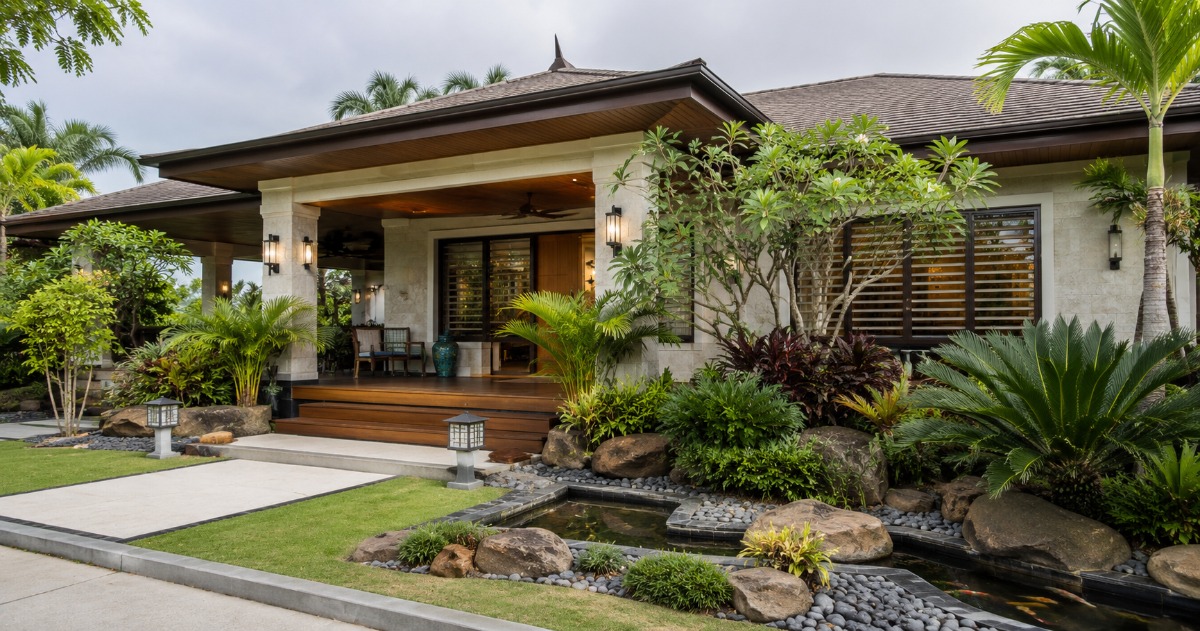
Bohol welcomed more than 1.4 million tourists last year. Foreign arrivals grew nearly 15 percent, led by visitors from South Korea. Charter flights from Japan are now beginning. The province has been officially named the Philippines’ Best Tourism Province among all 82 provinces. And tucked inside this remarkable moment, a landowner in Barangay Cambanac, Baclayon is holding something rare.
Ten titled hectares, five minutes from the ocean, fifteen minutes from Tagbilaran City, available to a qualified developer who wants to build a residential subdivision in one of Southeast Asia’s most admired island destinations.
The landowner is not casting a wide net. The preference is specific: a developer from Japan or South Korea who understands what their home market wants and who recognizes that those travelers are already arriving in Bohol in large numbers. Move 2 Bohol Property Solutions Specialist Lerma Moore is handling the representation.
The story of Bohol’s rise is one that real estate developers understand immediately when they hear it. An island of extraordinary natural and cultural assets. A tourism surge measured in millions. Infrastructure that has quietly matured. Direct international flights. A provincial government that has codified its commitment to sustainable growth.
The Bohol Sustainable Tourism Development Code was signed into law in 2025, creating a governance framework that protects the island’s environment while enabling measured, strategic development. For any investor building something meant to last, that framework is a reassurance, not a restriction.
Bohol is also the Philippines’ only UNESCO Global Geopark, a distinction that places it in rare company worldwide. The province’s tourism establishments grew from 976 in 2024 to 1,034 in 2025. It hosted ASEAN-level meetings, reflecting the quality of its public infrastructure. And Panglao Bohol International Airport already handles direct flights from Seoul, with Japanese charters arriving in 2026.
The land sits in Barangay Cambanac in the municipality of Baclayon, on Bohol’s southwestern coast. Baclayon is home to one of the oldest stone churches in the Philippines, built in the late 1500s, and its shoreline opens directly onto the Bohol Sea. The setting blends cultural depth with coastal proximity in a way that few development sites anywhere in the country can match.
The property is composed of two adjoining parcels that must be acquired together as a single transaction. Forty to fifty mature, producing coconut trees grace the land, offering natural character and an established tropical aesthetic that would define the identity of any residential streetscape built here.
- 📍Location: Barangay Cambanac, Baclayon, Bohol — 15 min from Tagbilaran City, 5 min to the ocean
- 🏝Total Area: 10 hectares across two adjoining parcels, sold as a single acquisition
- 🌴Coconut Grove: 40 to 50 established, producing coconut trees onsite
- 🏠Development Type: Single-family residential subdivision, open to developer’s vision
- ✈Airport Access: 30 minutes to Panglao Bohol International Airport with direct Seoul flights and Japan charters in 2026
- 📄Title and Documentation: Full documentation available to qualified developers on inquiry
Both parcels are offered exclusively as a combined transaction. For developers in Japan or South Korea, where land of comparable scope near a world-class ocean destination would carry costs that are orders of magnitude higher, Bohol’s current price points represent a genuinely rare market entry opportunity.
South Korea has been Bohol’s dominant foreign source market for years. At peak periods, as many as five direct flights per day arrived from South Korea alone, operated by carriers including Jeju Air, Air Busan, and Royal Air Philippines. Korean visitors have developed a deep affinity for Bohol’s diving, beaches, and laid-back lifestyle.
That affinity is evolving. Korean travelers are no longer only coming for short holidays. A growing segment is looking for longer-stay arrangements, second homes, and paths to semi-permanent living in Southeast Asian destinations they already know and love. Bohol checks every box on that list. A Korean developer building a community here would not be introducing their market to a new destination. They would be building where their market already arrives.
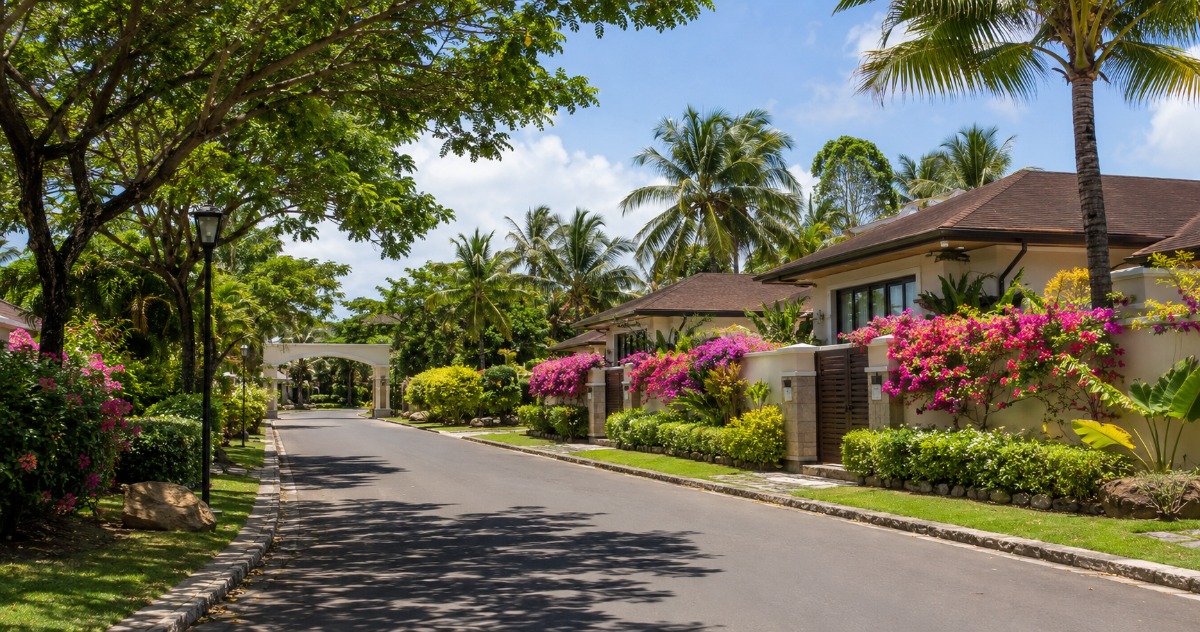
Japan represents Bohol’s newest and most strategically significant emerging source market. Charter flights from Japan are beginning in 2026, targeting the high-value, culturally conscious traveler that Bohol has been positioning itself for over the past several years. The timing is exceptional.
Japanese tourists bring particular preferences. Clean, well-planned environments. Privacy. Thoughtful design. Proximity to nature without sacrificing comfort. A residential subdivision conceived and built by a Japanese developer, using Japanese design sensibilities, situated on a coconut-shaded hillside five minutes from the Bohol Sea, would speak directly to that market in ways that a generically built subdivision never could.
Japan’s domestic real estate costs, aging population, and growing interest in Southeast Asian retirement and second-home markets make this opportunity especially timely. The yen-to-peso exchange rate, combined with Bohol’s relatively affordable land prices, gives Japanese investors significant purchasing power at this location.
No development pitch is stronger than the destination itself. Bohol is, simply, one of the most compelling islands in Asia. Its combination of natural wonders, cultural heritage, marine biodiversity, and island lifestyle is genuinely difficult to replicate anywhere in the region.
| Attraction | What It Offers |
|---|---|
| 🏖 Chocolate Hills | More than 1,200 symmetrical mounds, Bohol’s most iconic natural wonder and the province’s top tourist draw |
| 🏜 Panglao Island Beaches | White sand, crystal-clear water, world-class diving, consistently ranked among the Philippines’ finest shores |
| 🐨 Philippine Tarsier Sanctuary | Home to the world’s smallest primate, a globally unique wildlife encounter found nowhere else on earth |
| ⛰ Baclayon Church | One of the Philippines’ oldest stone churches, steps from the property, a 16th-century heritage landmark |
| 🌊 Bohol Sea Dive Sites | Whale sharks, abundant marine life, and some of Asia’s most celebrated underwater environments |
| 🏛 UNESCO Global Geopark | The Philippines’ first and only, placing Bohol among the world’s most significant natural heritage destinations |
These are not marketing abstractions. They are the reasons more than 1.4 million people chose Bohol last year. And they are the reasons many of those visitors leave Bohol asking a quiet, persistent question: how do I come back and stay?
A well-built residential subdivision answers that question for a generation of expats, retirees, remote workers, and second-home buyers from Japan, South Korea, and beyond. The land in Cambanac is ready to be that answer.
The landowner is choosing a partner as much as they are selling land. The vision is for a residential community that fits the landscape, respects the island, and gives families from Japan or Korea a genuine home near the ocean. Single-family lots. Garden space. The quiet, livable quality that is increasingly difficult to find anywhere near the sea in Asia.
The buyer pool for such homes is already identifiable: international retirees and semi-retirees, Korean and Japanese second-home buyers, remote professionals who have chosen geography as a lifestyle decision, and long-term expats already building lives in Bohol. A developer with regional market expertise is uniquely positioned to reach all of them.
Move 2 Bohol’s Property Solutions division provides full acquisition support for international developers, including property documentation, site visit coordination, legal introductions, and on-island due diligence assistance. Inquiries from Japanese and South Korean development firms are especially welcome.