

Ten Hectares. One Island. The Developer of a Lifetime.
On a tropical island that welcomed 1.4 million tourists last year, a landowner is seeking a visionary partner to build the next great residential community near the sea.

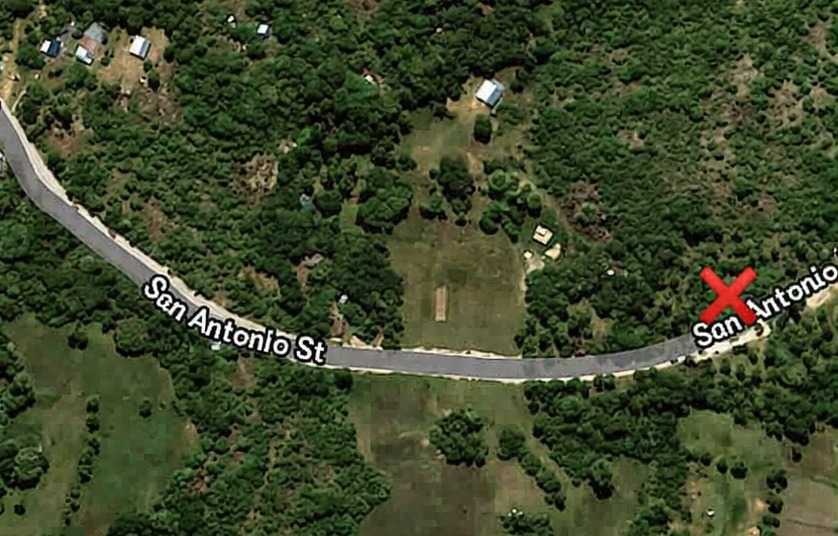
There is a moment in every great real estate story when the map changes. When the right piece of land, in the right place, meets the right vision at exactly the right time. That moment may be right now, on a quiet stretch of coconut-shaded earth in Cambanac, Baclayon — a barangay on the southwestern edge of Bohol Island, five minutes from the sea, fifteen minutes from a capital city, and squarely inside one of Southeast Asia’s most extraordinary tourism booms.
Bohol recorded 1,427,362 tourist arrivals in 2025, a 4.18 percent increase over the prior year, according to the Bohol Provincial Tourism Office. Foreign arrivals grew even faster — surging nearly 15 percent, driven by visitors from South Korea, China, the United States, Taiwan, and France. Charter flights from Japan are set to begin in May 2026, targeting high-value travelers aligned with Bohol’s cultural and sustainability identity. The province has been named the Philippines’ Best Tourism Destination Province among all 82 provinces, and it holds the rare distinction of being the country’s only UNESCO Global Geopark.
Into this moment, a Bohol landowner is offering something rare: a full 10 hectares of titled, subdivision-ready land in Barangay Cambanac — available to a qualified developer who wants to build a residential community near the ocean, in one of the world’s most compelling island destinations.
The property sits in Barangay Cambanac in the municipality of Baclayon, one of Bohol’s most storied communities. Baclayon is home to one of the oldest stone churches in the Philippines — the Baclayon Church, built in the late 1500s — and its coastline opens directly onto the Bohol Sea. The land is presented as two adjoining parcels that must be purchased together in their entirety: a 3-hectare premium frontage parcel priced at ₱1,500 per square meter, and a 7-hectare adjoining development parcel at ₱800 per square meter.
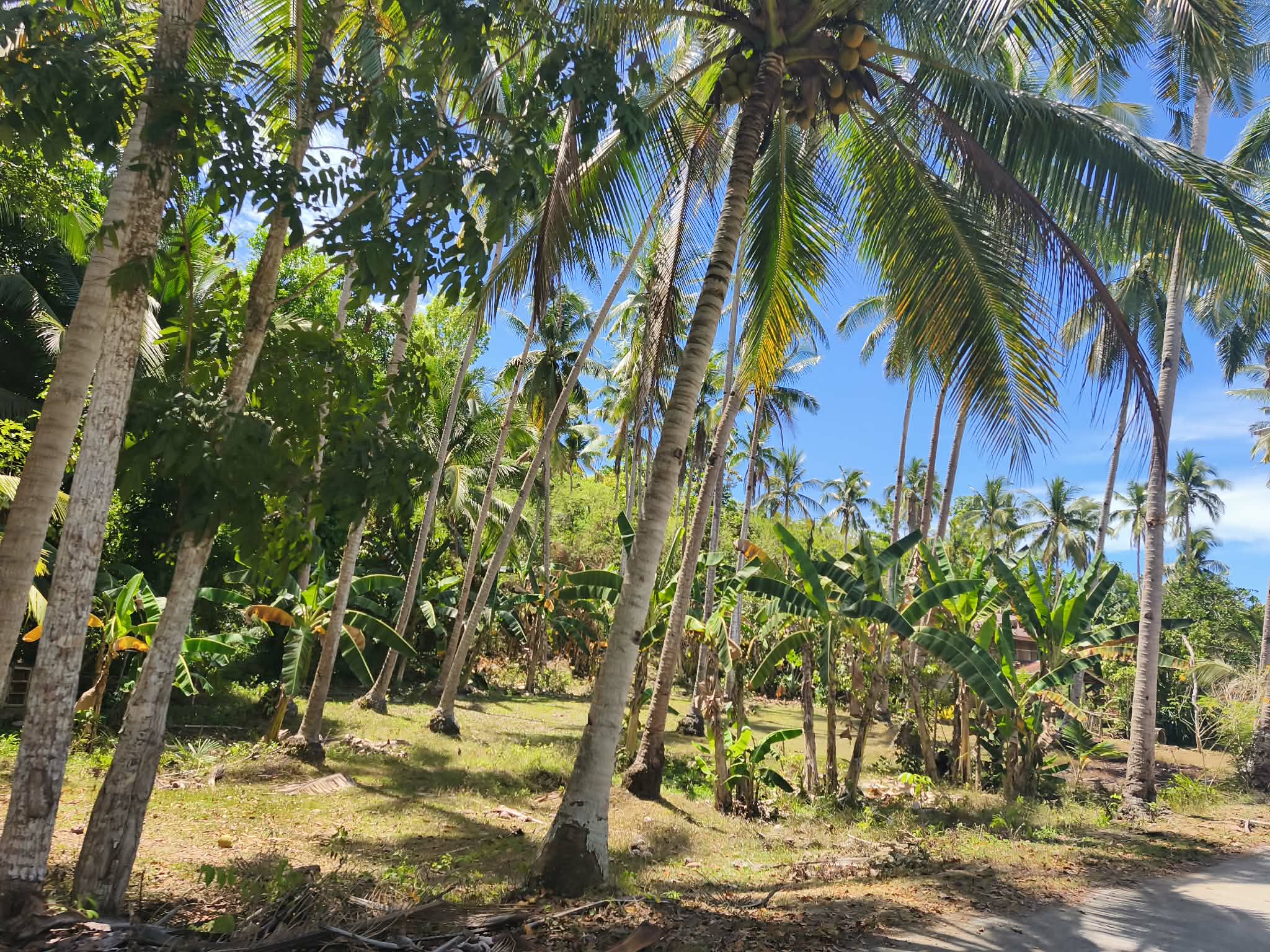
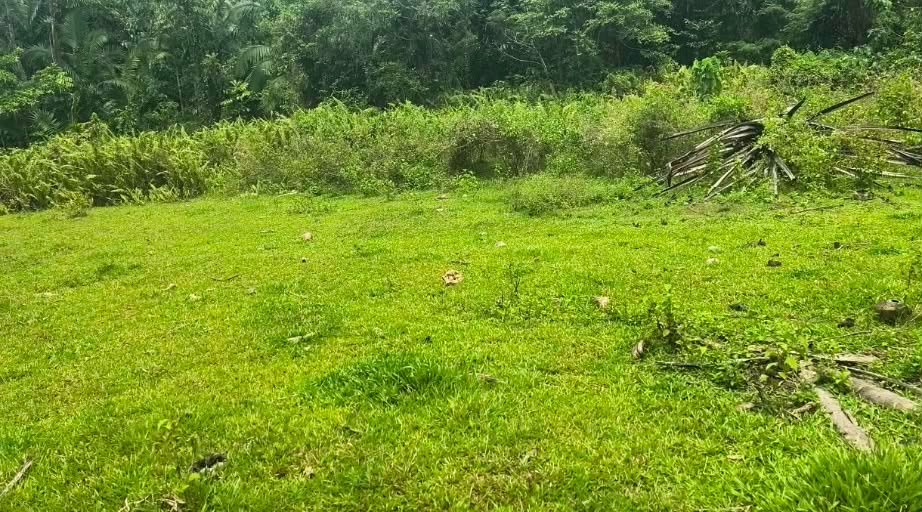
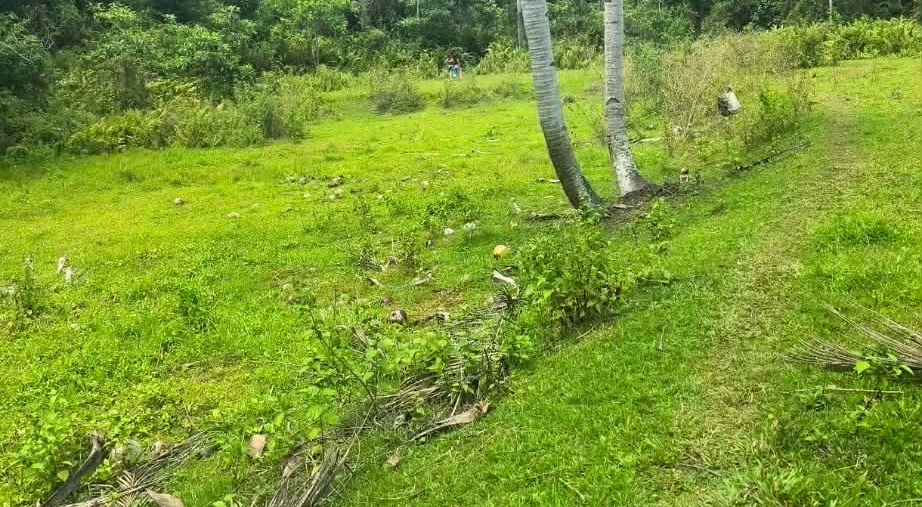
The property is dotted with 40 to 50 mature, producing coconut trees — a natural, photogenic landscape feature that speaks to the island’s agricultural heritage and offers immediate income potential during any development timeline. The terrain is predominantly flat and open, with areas of established grove that would lend character to a well-designed residential streetscape.
Both parcels are to be acquired together as a single transaction. For international developers, particularly those operating in Japan or South Korea where land at this scale near a world-class destination would be cost-prohibitive, Bohol’s current price points represent a compelling entry into a fast-appreciating market.
South Korea has been Bohol’s dominant foreign source market for years. At peak periods, as many as five direct flights per day arrived from South Korea alone, operated by carriers including Jeju Air, Air Busan, and Royal Air. While flight frequencies have moderated since their post-pandemic peak, South Korean visitors still represent the largest single block of international arrivals to the province — and the appetite among Korean travelers for longer-stay, lifestyle-oriented experiences in Southeast Asia continues to grow.
Japan represents Bohol’s newest and most strategically significant emerging market. Charter flights from Japan begin in May 2026, targeting precisely the high-value, culturally conscious traveler that the province has been positioning itself for. Japanese tourists have a well-documented affinity for clean, well-planned residential environments — and for islands. A developer with Japanese market knowledge building a thoughtfully designed subdivision in this location would be meeting an audience that is, quite literally, already on its way.
The data reinforces the optimism. Tourism establishments in Bohol grew from 976 in 2024 to 1,034 in 2025. The province hosted high-level ASEAN meetings — a signal of its infrastructure maturity. Bohol’s Sustainable Tourism Development Code was signed into law in 2025, creating a governance framework that protects the environment while enabling measured growth. For a developer, this means a destination that is not in danger of being loved to death, but rather one that is managing its growth with intention.
Bohol is not simply a tourism statistic. It is one of the genuinely remarkable places on earth. The island sits in the Visayan Sea in the central Philippines, a roughly two-hour flight from Manila or a fast ferry from Cebu. It is small enough to feel intimate — approximately 4,117 square kilometers — yet large enough to contain entire worlds within it.
The landowner is not simply selling land. They are choosing a partner. Lerma Moore, representing the owner through Move 2 Bohol’s Property Solutions division, describes the arrangement as one that is open to a developer’s vision — while grounded in a clear concept of what the location deserves.
The intended development type is single-family residential subdivision — homes with space, with garden lots, with the kind of quiet, livable quality that is increasingly difficult to find near the ocean in Asia. Given the proximity to Baclayon Church, Tagbilaran City, the Panglao tourist corridor, and the Bohol Panglao International Airport — which receives direct flights from Seoul, and will receive charters from Tokyo beginning this year — the market for such homes extends well beyond the local population.
International retirees. Japanese and Korean second-home buyers. Remote-working professionals who can choose their geography and are choosing tropical islands with reliable infrastructure. Long-term expats already falling in love with Bohol’s warmth, safety, and natural beauty. All of them represent a buyer pool that a developer with regional market expertise is uniquely positioned to reach.
Lerma Moore represents the landowner in this opportunity and serves as the primary contact for qualified developers. Through Move 2 Bohol’s Property Solutions division, she supports international investors with property acquisition, documentation, developer introductions, and on-island coordination. Serious inquiries from Japanese and South Korean development firms are especially welcome.
Full property documentation, site visit coordination, and developer-level due diligence support are available to serious inquiries. Move 2 Bohol operates as a full-service relocation and property solutions provider, with deep island knowledge and direct relationships with landowners, legal professionals, and local government offices.
Bohol welcomed 1.4 million people last year. It will welcome more this year. The charter flights from Japan are coming. The Korean travelers are already here. The UNESCO designation is in place. The island has been recognized, officially, as the best tourism province in the Philippines. The land in Cambanac is ten hectares, five minutes from the sea, fifteen minutes from the city, and it is waiting for a developer with the vision to see what it can become.
Opportunities like this — the right land, in the right place, at the right moment — do not stay available.