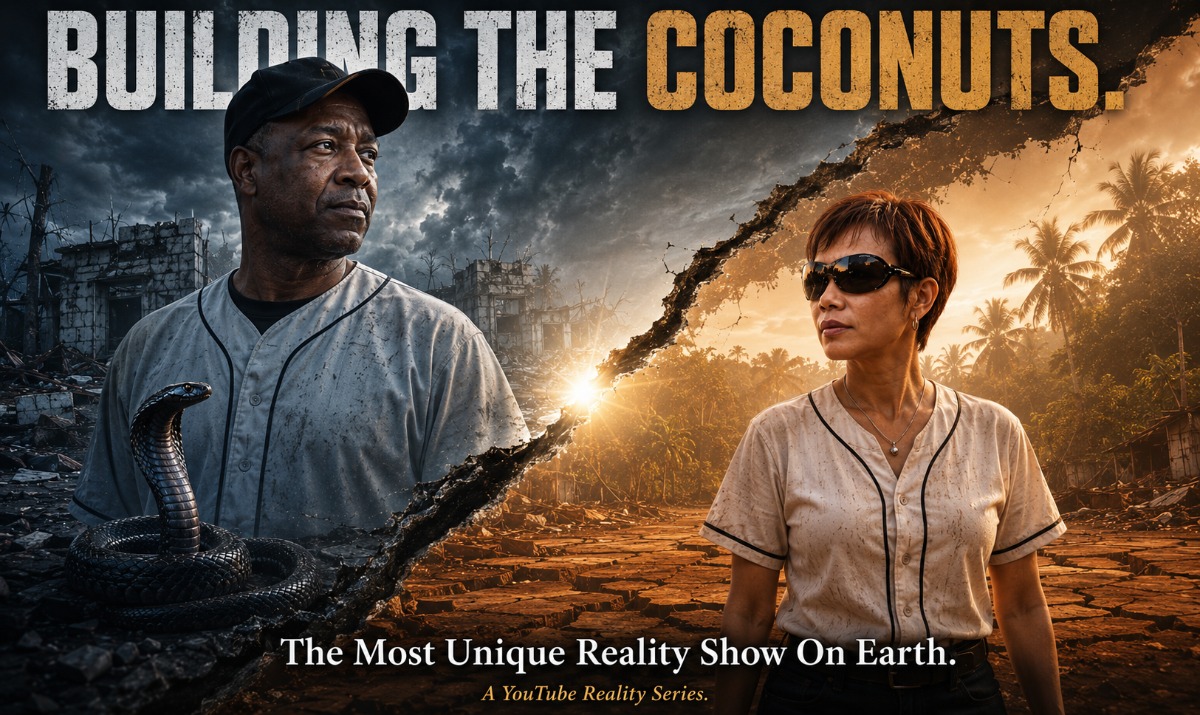
The decision came before the blueprints. Before the land was cleared, before the first supply order was placed, before the first founding member signed on. The cameras were decided on first.
That is not how most sports organizations approach their public presence, and it was not an accident that we did it differently. It was a choice rooted in four specific reasons, each one arriving in a particular order, each one reinforcing the next. This is the note behind that choice.
Reason One: Real Stories Cannot Be Manufactured After the Fact
Merv Moore has spent more than three decades building things in places where building things was difficult. Baseball programs in Switzerland. Development work in Bhutan and Nepal. A national fastpitch softball program in Brunei. A media career in Texas. He has watched organizations succeed and he has watched organizations fail, and he has paid close attention to what separates the two.
His conclusion is a simple one: people can detect a highlight reel. They have been marketed to for their entire lives, and they know the difference between watching something genuine and being sold a finished product with the rough edges removed. The moment you begin curating the story, you lose the connection that makes an audience actually care about the outcome.
Building the Coconuts was designed from the beginning as the opposite of curation. The guiding principle, stated plainly, is to film everything and figure out what to protect later. If something goes wrong on the construction site, the cameras keep rolling. If a supply delivery falls through, that goes in. If a difficult conversation happens between co-founders, it stays in. The struggle is not a liability to be managed. The struggle is the show.
That philosophy made some people uncomfortable when it was first proposed. It still does. But it is the only version of this story worth telling, and it is the only version that will mean something to the young people we are building this for.
Reason Two: The Community Deserved Proof, Not Promises
Barangay Cambanac has seen development projects come before. The community has learned, with good reason, to wait and watch before it celebrates. Polished presentations and carefully managed public faces have arrived on this island before, and some of them built something real and some of them quietly disappeared when the difficulty became apparent.
Lerma Moore, General Manager of the Coconuts Performance Center and a sitting Kagawad of Cambanac, understood this dynamic from the inside. She has spent years in public service watching how community trust is built and how it is broken. When the decision to film everything was put to her, she did not hesitate.
Her reasoning was not about production strategy. It was about accountability to the people living in the barangay where this facility will exist. When residents see the cameras, they know the project is serious. They know no one is going to quietly disappear. Everything being done is on record. For a community that has learned to be cautious about outside investors with large ambitions, that visible commitment matters more than any speech or announcement could.
The cameras are, among other things, a promise made in public. We intend to keep it.
Reason Three: The Place Itself Is Part of the Story
Bohol is extraordinary. That is not promotional language. It is the honest assessment of everyone who has spent time here. The Chocolate Hills. The tarsiers. The diving waters. The texture of community life in a barangay like Cambanac, where neighbors know each other across generations and where the landscape is something that a person from the outside world has to stop and adjust to before they can really see it.
Building a baseball and softball academy here is not the same as building one in a suburb of Manila or on a flat commercial lot in Cebu City. The terrain is uneven and demanding. The weather during construction season is unpredictable, with afternoon rains that arrive without announcement and occasional typhoon threats that can halt progress for days at a stretch. Materials and supplies that are standard in larger cities require additional time and cost and planning to arrive in the interior of the island. The jungle does not function as a backdrop. It has opinions. It pushes back.
We want every person who watches this series to feel that resistance. We want them to understand that what is being built here is being built inside a living, breathing, weather-volatile, logistically complex environment that is also one of the most beautiful places on earth. That tension is part of what makes the story worth following. It could not be conveyed through a press release or a finished documentary produced after the fact. It has to be experienced in real time.
Reason Four: The Children Watching Need to See the Beginning
This is the reason that sits beneath all the others.
There are children in Cambanac right now who have never had access to elite coaching, never had a field worth training on, and never had anyone stand in front of them and say that they had what it takes to compete at the highest levels of this sport. Those children will eventually become the athletes, the staff, the community members who carry this club forward. What they need to see is not just the finished facility. They need to see the founding.
They need to watch what it looks like when someone believes in them enough to build something from nothing in their backyard. They need to see the hard days alongside the good ones, because the hard days are where the real instruction lives. Showing up when everything is uncertain, moving forward when the plan changes, finding a way through when the easier path is to stop and wait for better conditions. Those are the lessons this club intends to teach on the field. They should also be in the footage.
When a 14-year-old in Cambanac watches Building the Coconuts years from now and sees what it took to create the place where she learned to play, that is the version of the story that matters most to us. The finished trophy case and the polished facility tour will never carry the weight of the first day a camera recorded an empty field and someone looked into the lens and said: this is where we are going to build something extraordinary.
That is why we chose to tell this story on camera. And that is the inheritance we hope the series leaves behind.
Building the Coconuts premieres on the Bohol Coconuts YouTube channel beginning June 23, 2026.
